To accelerate the understanding of Parkinson’s disease, improve treatment, and, ultimately, find a cure, two prominent funders in the field have recently expanded their requirements for grantees to share their findings.
The Michael J. Fox Foundation for Parkinson’s Research (MJFF) and Aligning Science Across Parkinson’s (ASAP) use open science policies to ensure information at all stages in the research process are accessible to all. The two organizations work closely together to advance Parkinson’s research. MJFF serves as an implementation partner for ASAP-supported programs and helps translate shared priorities around collaboration, resource generation and open data sharing into practice.
Both organizations are members of the Open Research Funders Group where they are held up as models for their policies and dedicating resources to support scientists data sharing, says Michele Avissar-Whiting, who serves as an ORFG coordinating committee member and is director of open science strategy at the Howard Hughes Medical Institute.
“Every time a funder does something like this, it really de-risks it for other funders,” she said. “That’s the biggest value for ORFG. Organizations that are further along can tell their stories about implementation and questions they’ve gotten. Funders who are curious and want to start moving in that direction will feel a little bit more comfortable.”
Aligning Science Across Parkinson’s (ASAP)
From its launch in 2019, open science has been at the core of ASAP’s work and integrated into its mission. The global initiative to advance targeted basic research for Parkinson’s disease partners with MJFF to strategize and implement its programs.
“ASAP is trying to increase collaboration, get researchers out of their siloes, and create an infrastructure of tools and data sets that other researchers can build upon,” said Robert Thibault, open science consultant at the Coalition for Aligning Science, which is the managing entity for ASAP.
ASAP’s Open Science Policy Handbook was updated in 2024 and again in December 2025.
“The basic policy is not too complicated: Anything you produce needs to be deposited and made available to the public,” said Thibault, noting exceptions for sensitive human data with controlled access.
ASAP recognized the need for changes, and the first was a shift in timing.
The original policy required that data, code, and protocols be made publicly available at the time of publication in a journal. The updated policy now mandates that these materials be publicly available when a preprint is posted – which typically is about 10 months earlier. “This way, when somebody makes a scientific claim, right away, the evidence is available,” Thibault said. “The reviewers can see it, and the rest of the scientific community can see it.”
While about 15% of journal articles in biology have an associated preprint, the rate is over 95% with the ASAP initiative. To date, there are 520 preprints, with the vast majority openly licensed with no restriction on reuse so they can be translated, adapted and used in textbooks.
This early release of supplemental materials also allows ASAP to check that what has been deposited is in line with its policy and standards.
Second, ASAP is trying to increase reusability of resources. For example, the new version of the policy requires sharing of both raw data captured directly from a recording instrument and cleaned, processed data used for statistical analyses, alongside detailed README files, according to Thibault. The emphasis is on the FAIR principles – findable, accessible, interoperable and reusable – and data meeting community standards.
“We want each output across the research lifecycle – physical lab materials, experimental protocols, data, and code – to be accessible, because each step relies on the previous one,” he said. “We want researchers to be able to take out any piece of that pipeline and build on it.”
To help researchers meet these open science requirements, ASAP provides mechanisms to support grantees. ASAP offers a grantee-facing online platform with videos and shared documents with instructions on how to draft README files, assign open licenses and post preprints, among other open science practices. “We try to give clear guidance and understand when they need additional assistance,” he said.
O ne area where support proved crucial is for depositing neurophysiology data. These data are first captured in diverse proprietary formats that rarely have an associated pipeline for conversion into the reuseable, community-recognized data standard. ASAP contracted CatalystNeuro, which works directly with grantees to establish these pipelines and place them in the public domain.
“Culture change is happening in the research world,” Thibault noted, but it takes time. These updates were a natural next step for the ASAP open science policy. Most grantees have been responsive to the changes, especially when given the support to do the proper documentation, he said. Starting in June, researchers had to earmark part of their funding for a data manager. “We feel better positioned to request these specialized tasks of detailed raw data sharing” with the extra personnel to assist, he said. The expectation of using open science practices at the beginning of the research process, along with the support of a data manager and other ASAP-provided resources, makes it easier for grantees to adhere to ASAP’s policies.
ASAP’s mission is focused on bolstering collaboration, resource generation, and data sharing to accelerate the pace of discovery for Parkinson’s disease. In the same way, ASAP is committed to sharing its experience embedding open science practices into research programs. The 2022 ASAP Blueprint for Collaborative Science and 2025 white paper Investing in Open Science: Key Considerations for Funders presents initial findings on how the initiative’s approach to open science has worked since its inception.
Additionally, ASAP contributed to the development of the Preprint Policy Framework with Creative Commons, the Gates Foundation and HHMI, among others.
In April, ASAP and The Michael J. Fox Foundation announced plans to expand research into Parkinson’s with a $261 million investment in grants to map the biological blueprint of Parkinson’s disease and build a standardized toolkit of global research resources. ASAP has now funded nearly 400 investigators across 187 institutions in 22 countries.
ASAP is part of the CNS Quest, an initiative to accelerate discoveries, treatments, and care for people with Parkinson’s disease which is supported by the Sergey Brin Family Foundation and Catalyst4.
The Michael J. Fox Foundation (MJFF)
Six years after adopting an open access policy, MJFF introduced a revised open science policy in March 2026 that builds on its longstanding commitment to openness while expanding requirements for sharing research outputs.
While the revised policy introduces new requirements around preprints, data, software and persistent identifiers, it builds on many years of MJFF supporting open access publishing, shared research resources and collaborative science.
“We are interested in openness, not just with regard to publications, but all outputs that are associated with a research study,” said Josh Gottesman, MJFF’s program lead for open science. “Publications are not the be-all, end-all. There is a lot more that goes into research and we want to recognize and utilize other contributions and resources that are generated.”
For MJFF, openness extends beyond publications and datasets to the collaborative practices that enable researchers to build on one another’s work more efficiently.
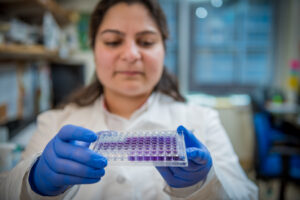 The foundation is focused on finding an objective test for Parkinson’s, engaging patients in research, and supporting the development of new treatments and a cure. Through its revised policy, MJFF aims to strengthen research integrity, improve collaboration and accelerate the pace of discovery by making research outputs more broadly available.
For MJFF, openness supports two core goals: strengthening research integrity and accelerating scientific discovery, Gottesman said.
The new policy will allow the public charity to quantifiably measure the impact of its grant making investments. Using persistent identifiers (PIDs) on outputs generated throughout the research process including data sets, publications, code, cell lines, and the grants themselves MJFF hopes to more systematically follow what happens with the outputs and findings after the grant ends, ideally following the journey from an initial grant made by MJFF that later supported the development of a drug that helps people with Parkinson’s.
The MJFF open science policy requires research outputs – preprints, articles, data, code and software – to be deposited in a community-recognized repository with accompanying information and permissive licensing that enables re-use while ensuring proper attribution to recognize the contributions from prior research.
As with ASAP’s policy, MJFF mandates preprints posted no later than the date a manuscript is submitted to a journal. Preprints and publications must be immediately, publicly and persistently available, with an open license and include information on how related research outputs can be accessed. Also, to track the outcomes of its research, outputs must acknowledge MJFF funding using a persistent identifier (in their case their ROR ID) .
In addition to these mandates, MJFF is encouraging researchers to adopt practices to make science more transparent and reliable such as preregistering research plans, sharing detailed protocols to help other researchers reproduce results, and providing access to materials (such as tools or reagents) to help speed up experiments.
The organization began working on the new policy in the fall of 2025 in consultation with ASAP and Stratos, a consultancy that helped draft ASAP’s initial policy, Gottesman said. MJFF’s policy aims to be iterative, he noted, to ensure continued support for accelerated research in a way that aligns with fieldwide best practices and in a manner that seeks to minimize burden associated with compliance.
“This is a starting point for how we support and require openness in our research,” he said. “It is a living document that will evolve over time as the field and research does itself.”
Before the policy went into effect, Gottesman got feedback throughout the organization, which has nearly400 staff members.
“It was really important for us to solicit input from the people who are actively managing grants on a day-to-day basis and our scientific staff to understand, ‘Are these the actual things that will be useful?’” said Gottesman, “At the end of the day, this policy is intended to support their vision for what and how we should be conducting research while encouraging scientists in academia and industry to continue or expand their work on Parkinson’s disease.”
So far, the new policy has been positively received. Gottseman’s advice to other funders considering adopting something similar: “Just try something.” It’s not going to be perfect. Be thoughtful and listen to internal and external audiences, he added.
“Policies that support your ability to measure the impact of your research are extremely valuable to internal grant making staff and research leadership, enabling them more confidently make funding decisions based on qualitative information,” he said.
Since its founding in 2000, MJFF has funded more than $3 billion in Parkinson’s research. In 2026 alone, the foundation anticipates investing approximately $698 million in Parkinson’s research — more than 2.5 times the U.S. government’s annual investment in the disease which affects more than 10 million people worldwide.
HHMI’s Avissar-Whiting said these policy changes are coming at a time when getting serious about the structure of data is more important than ever.
“In the future, it’s not humans who are going to be the primary consumers of research. It’s going to be agents on behalf of humans who are asking whether results are reproducible,” Avissar-Whiting said. “We will need to scale reuse and reproduction of research. For everyone who was thinking’ Sharing data is just the right thing to do, maybe someday someone will use it,’ – now we are living in a different world.”
[HHMI was featured along with Astera Institute and Gates Foundation in SPARC’s impact story, Funders Roll Out Next Gen Open Policies]